

The Propped Door Problem: How Simple Habits Defeat Expensive Security - Prudential Alarm
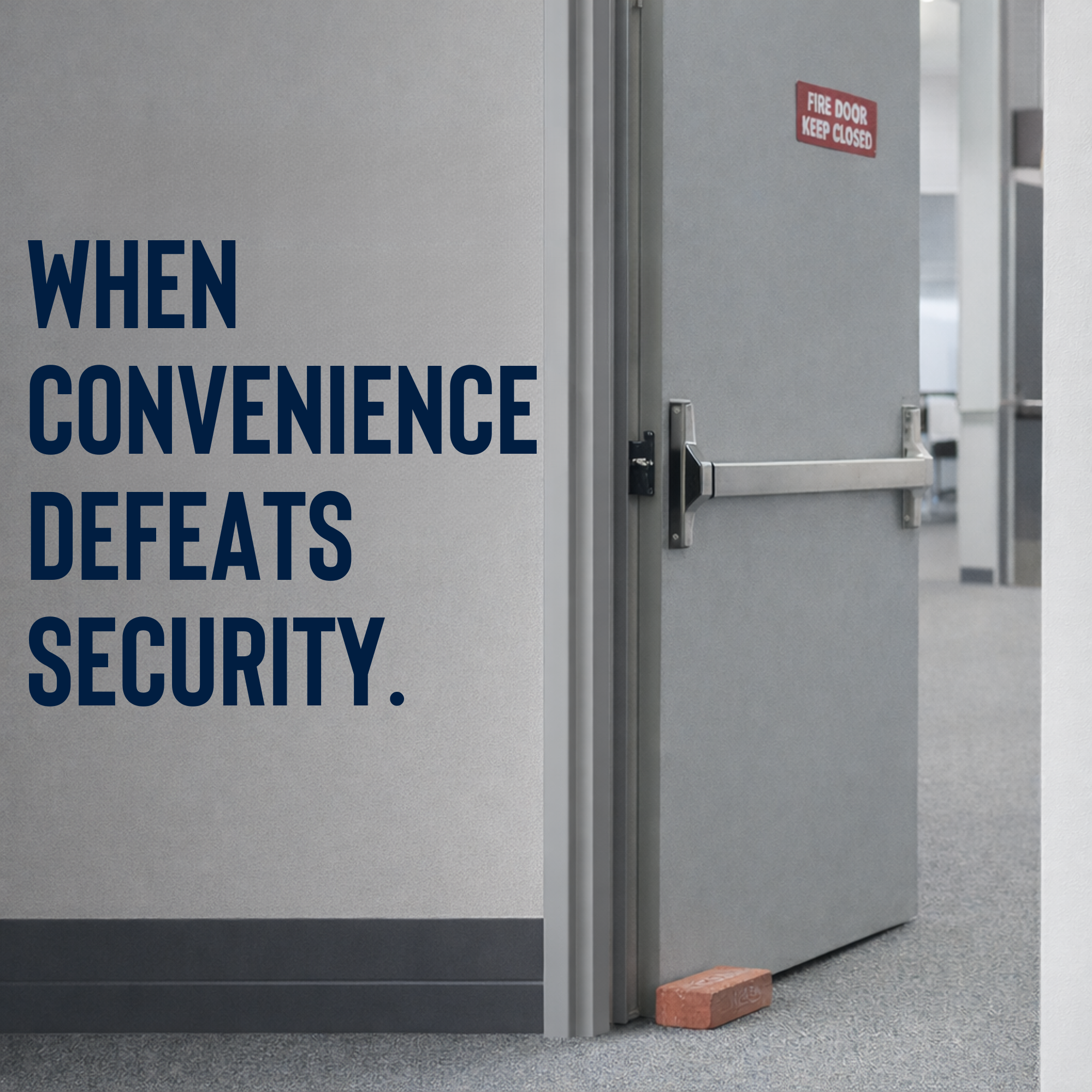
You can spend a significant amount on high-grade locks, encrypted card readers, and reinforced steel doors, but your entire investment can be defeated by a single brick, a trash can, or a folded piece of cardboard.
In the security industry, we call this the “Propped Door Problem." It’s one of the most common security breaches in schools, warehouses, and office buildings across Michigan and Ohio.
It happens when an employee or student temporarily bypasses a locked door for convenience, forgetting that they’ve just rolled out the red carpet for unauthorized visitors.
1. The Invisible Risks of a Propped Door
A propped door does more than just let in a breeze; it creates several critical vulnerabilities that can lead to catastrophic failures:
Bypassing the Digital Trail: Access control systems are designed to tell you who entered and when. When a door is propped, unauthorized individuals can enter without a trace, making your audit logs useless during an investigation.
HVAC & Energy Drain: In the humid summers of the Midwest or the freezing winters of Michigan and Ohio, a propped door is a massive drain on your energy bill, forcing your HVAC system to work overtime.
“Tailgating" Made Easy: Even when not propped wide open, a door that doesn’t latch properly allows “tailgaters" to follow an authorized user inside without scanning their own credential.
2. The Legal Danger: Fire Code & NFPA 80 Compliance
One of the most overlooked aspects of the propped door is the legal liability. Most exterior and stairwell doors are Fire-Rated Doors. According to NFPA 80 standards, these doors must be closed and latched to serve as a barrier against smoke and flames.
The “Chimney Effect": Propped doors allow oxygen to feed a fire and create a “flue" that sucks smoke through hallways and stairwells, making evacuation impossible.
Voiding Insurance: If a fire occurs and investigators find that fire doors were intentionally propped open, it can lead to massive fines, civil liability, and the potential denial of insurance claims.
3. Specialized Security for Schools: Protecting the Perimeter
For schools, a propped door isn’t just a maintenance issue, it’s a top-tier safety threat. Modern school security relies on a “closed perimeter" strategy.
Classroom vs. Exterior: While many schools now mandate that classroom doors stay locked, the “back door" at the gym or the loading dock remains a high-risk area for propping.
Monitoring the Perimeter: We recommend integrated Door Prop Alarms that alert the main office the moment a perimeter door is left unlatched. This ensures that the “locked" status of the school isn’t just a policy, but a verified reality.
4. Technical Solutions: Beyond the Door Contact
If your staff has a habit of propping doors, you don’t have to rely on “policing" them. You can use hardware to solve the human problem:
Magnetic Hold-Opens: If a door needs to stay open for high traffic, we install electromagnetic holders integrated with your fire alarm. They hold the door open during the day but automatically release it the second the fire alarm or a security schedule is triggered.
“Door Held Open" (DHO) Alerts: We can program your system to distinguish between a normal entrance (15 seconds) and a propped door (60+ seconds). When a door is held too long, the system can trigger a local “chirp" or chime to remind the user, or send a silent notification to the facility manager.
Power Door Closers: For heavy-use areas, high-quality automatic closers ensure the door has enough force to overcome wind or air pressure and latch securely every time.
5. Culture and Education
Technology catches the problem, but a security-first culture prevents it. Use your system data to show employees the “why" behind the rules. Instead of just a “No Propping" sign, explain: “This door protects our inventory and our staff. Keeping it latched is the easiest way to keep everyone safe."
Stop letting a $1.00 brick defeat your security investment. Even an affordable, single-door access control system is useless if it’s never allowed to latch. Is your facility suffering from the “Propped Door Problem"? Let Prudential Alarm audit your settings and hardware to ensure your perimeter stays truly secure.
Ready to secure your business with the latest in access control and monitoring technology?
Contact Prudential Alarm for a consultation today.
Visit prudentialalarms.com/contact-us or call us at (800) 252-0368 .